Dave Weckl decided to fulfill his dream of starting a
live band in 1998. Having released three solo projects
that featured top jazz performers such as Chick Corea,
Anthony Jackson, Michael Brecker and Steve Gadd, Dave
was driven to write and produce music driven by band
chemistry and delivered personally to audiences
worldwide.
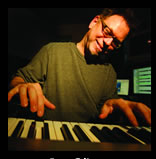
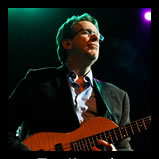
The original DWB lineup included two musicians Dave had
known, respected, and played with for years; Jay Oliver
(keyboards), who had been Dave's good friend since high
school, and Tom Kennedy (bass), who had jammed with Dave
since the age of 15. Jay had been very involved in
writing and production of Dave's original three solo
records, while Tom also appeared on many of the songs.
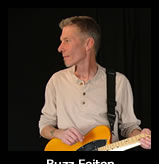
Rounding out the lineup were two highly-respected
world-class musicians in Brandon Fields (saxophones) and
Buzz Feiten (guitars).
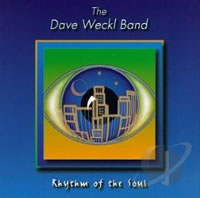
The band's first release, Rhythm of the Soul, was about
collaboration and chemistry that started in the studio
and grew stronger as live performances. Though Oliver
and Weckl wrote this album, it differed from the solo
releases because it was written with a touring band in
mind.
ROS also introduced a consistency in theme and feel that
came with a total
band effort. Both sonically and thematically, one could
sense something more organic and loose - with R&B/Blues,
funk and New Orleans-inspired textures.
"The Zone" kicked it all off with thick pocket grooves,
soulful organ and guitar solos, and a fat bottom end.
"101 Shuffle, "Mud Sauce," (with Tom on an upright
bass), and "Designer Stubble" introduced a myriad of
textures that many fans had never heard in Dave's music
- with driving guitar leads and authentic R&B flavors.
And the mysterious "Someone's Watching" featured
beautiful sax leads with undercurrent of warm ambience.
The "band sensibility" manifested itself in a different
way when Dave, Jay, and Tom recorded "Transition Jam."
Symbolic of Dave's goal to put together a band with his
longtime friends, this particular song captured three
friends, 22 years after they had first jammed together,
jamming again in a studio as accomplished professional
musicians - in a band together.
And there was more to it than that. As Dave describes in
the record's liner notes, "we wanted everyone to hear
the awesome Tom Kennedy, so we decided to set up a
couple of mics and roll tape...Yeah Tommy!"
The band pulled off some ambitious jams in "Access
Denied" (including Frank Gambale on guitar and Steve
Tavaglione on tenor sax), and "Big B Little B" (also
featuring Frank and Bob Malach on tenor sax). Dave and
Jay paid
tribute to the passing of legendary R&B/Gospel pianist
Richard Tee and the birth of his daughter, Claire, with
"Song for Claire."
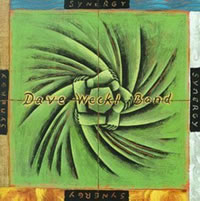
Synergy (1999) was named for the spontaneous
and fully collaborative band approach to writing the
music. In the album's
liner notes, Dave says "I decided to have a band writing
day, rehearsal kind of jam session, which ended up
yielding the foundation for almost half of the material
for the CD."
"High Life" kicked this record off with a bright groove,
displaced syncopations, and extended sax and keys solos
- wrapping up with a powerful drum solo.
Buzz wrote two strong tunes on the album - "Panda's
Dream," with strong, defined riffs that were a trademark
aspect of the band's sound at that time, and the
delicate, acoustic flavored "A Simple Prayer." Both
added greatly to this record.
Of course, a highlight of the record is "Cultural
Concurrence," an all-percussion piece featuring looped
African drum sounds and trademark drum set soloing. This
piece is followed by a newer version of the old
favorite, "Tower of Inspiration," called "Tower '99."
Fans of the original version on the "Master Plan" record
appreciated the funky/groovy feel to the newer one.
Prior to the band's next record, in 2000, both Jay and
Buzz left to pursue the many other projects on their
respective plates. This is when Steve Weingart joined.
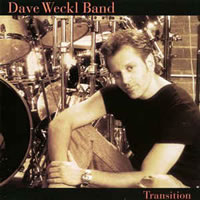
Appropriately, the new lineup produced the band's next
record, entitled "Transition."
This record offered several tunes that have become fan
favorites at live shows and on the band's live record
(LIVE...and Very Plugged In), including "Wake Up,"
"Braziluba," "Crossing Paths," and "Just for the
Record." The record also featured the addition of Remo
percussion to Dave's kit, plus an auxiliary 18" bass
drum. His creative use of these
new drums inspired much of the writing on this record as
well as its follow up - "Perpetual Motion."
"Perpetual Motion" found the new lineup
maturing and producing many interesting and angular
grooves, such as on "Double Up" and "Child's Play."
"Mesmer-Eyes" became a live favorite with its keyboard
and sax duel, as did "Tiempo de Festival."
Also important to the sound and direction of the band:
starting with "Transition," Dave took on the role of
sole producer and mixing engineer.
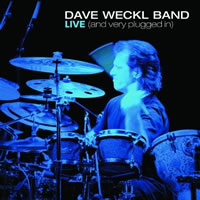
In 2002, the band produced its first-ever and long
awaited live album. A two-disc package, Live...and Very
Plugged In captured the band at its peak of energy and
playfulness.
Every song on "Live..." has its own unique turns from
the studio version and there are plenty of signature
moments of comedy - some planned and some not planned.
"Hesitation" finds the audience rolling in laughter as
Dave and Gary Meek play a short intro to Pee Wee Ellis'
"The Chicken." And...Tom's sense of humor shines when he
answers someone's cell phone ringing in the audience
with his own interpretation on the bass during his solo
on Thelonious Monk's "Rhythm-A-Ning."
But this is an album of serious music - highlighted by
the interplay of four great musicians who, together and
independently, bring new energy to many of the band's
best tunes. And Dave takes his drum solo to all-new
heights. A track every drummer should hear, "Cultural
Concurrence" finds Dave exploring many corners of his
repertoire, from the opening brush work and underlying
double-bass drum pulse to a fantastic percussion
movement, signature drum set soloing, and tasteful
cymbal work to close out the piece.
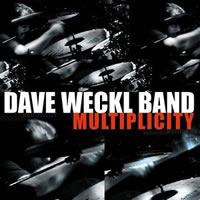
In 2005, the band released Multiplicity. The record
featured a diverse lineup of nine songs highlighting the
writing talents of Steve, Gary and Dave, who spent many
hours together in Dave's studio composing most of the
material. But the performance talents of all the band
members shined through on this album.
The funky "Watch Your Step" offered a solid
groove building into a drum solo in the middle. Dave sat
behind the board for this entire record - yielding a
very precise sound not unlike his approach to music.
2006 saw another transition for the band when Steve
Weingart left to pursue other projects. Jay Oliver
returned for some exciting North American tour dates
that included old DWB favorites and some standards.
In 2013, the band reunited for two beneift shows: one at
Cafe Cordiale in Los Angeles and one in Springfield, IL,
as part of the Convergence project.
In 2019, the band got together in St. Louis for a show
at the Chesterfield Wine and Jazz Festival. The show
featured original members Buzz Feiten, Tom Kennedy, and
Jay Oliver, plus longtime saxophonist Gary Meek. Teh
12-song performance is available on all major streaming
platforms! Click
here for direct links to the show!





















 Dave Weckl decided to fulfill his dream of starting a
live band in 1998. Having released three solo projects
that featured top jazz performers such as Chick Corea,
Anthony Jackson, Michael Brecker and Steve Gadd, Dave
was driven to write and produce music driven by band
chemistry and delivered personally to audiences
worldwide.
Dave Weckl decided to fulfill his dream of starting a
live band in 1998. Having released three solo projects
that featured top jazz performers such as Chick Corea,
Anthony Jackson, Michael Brecker and Steve Gadd, Dave
was driven to write and produce music driven by band
chemistry and delivered personally to audiences
worldwide. end.
"101 Shuffle, "Mud Sauce," (with Tom on an upright
bass), and "Designer Stubble" introduced a myriad of
textures that many fans had never heard in Dave's music
- with driving guitar leads and authentic R&B flavors.
And the mysterious "Someone's Watching" featured
beautiful sax leads with undercurrent of warm ambience.
end.
"101 Shuffle, "Mud Sauce," (with Tom on an upright
bass), and "Designer Stubble" introduced a myriad of
textures that many fans had never heard in Dave's music
- with driving guitar leads and authentic R&B flavors.
And the mysterious "Someone's Watching" featured
beautiful sax leads with undercurrent of warm ambience.
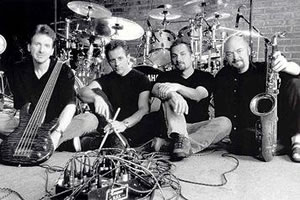 Of course, a highlight of the record is "Cultural
Concurrence," an all-percussion piece featuring looped
African drum sounds and trademark drum set soloing. This
piece is followed by a newer version of the old
favorite, "Tower of Inspiration," called "Tower '99."
Fans of the original version on the "Master Plan" record
appreciated the funky/groovy feel to the newer one.
Of course, a highlight of the record is "Cultural
Concurrence," an all-percussion piece featuring looped
African drum sounds and trademark drum set soloing. This
piece is followed by a newer version of the old
favorite, "Tower of Inspiration," called "Tower '99."
Fans of the original version on the "Master Plan" record
appreciated the funky/groovy feel to the newer one.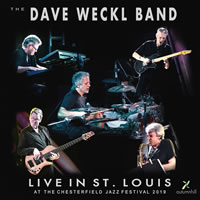 returned for some exciting North American tour dates
that included old DWB favorites and some standards.
In 2013, the band reunited for two beneift shows: one at
Cafe Cordiale in Los Angeles and one in Springfield, IL,
as part of the Convergence project.
returned for some exciting North American tour dates
that included old DWB favorites and some standards.
In 2013, the band reunited for two beneift shows: one at
Cafe Cordiale in Los Angeles and one in Springfield, IL,
as part of the Convergence project.